This page is a short summary of the fifth solution. This solution downloads a large robot model that others trained, and uses it unchanged. Nothing in it is trained here. The page says what it does, what it scored, and its one main lesson. The full story is in the chapter on this solution.
Contents#
- What it is
- How it works
- What it needs
- What it scored
- Where it is strong and where it breaks
- When to choose it
1. What it is#
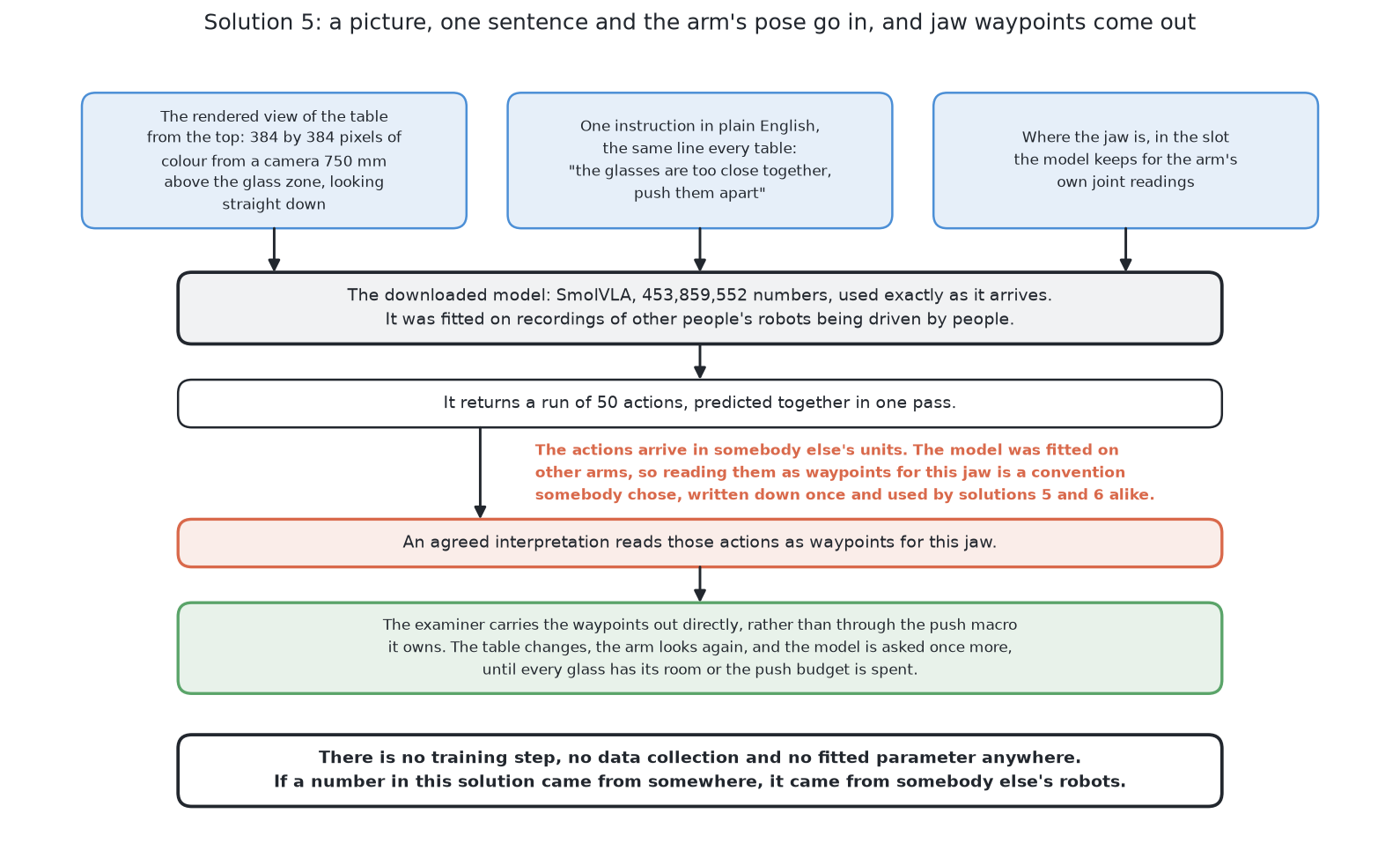
A vision-language-action model is one network that takes a picture and a written instruction, and returns robot actions. The model here is SmolVLA, from LeRobot. It runs on a laptop.
This solution is in the book mainly for one reason. The same model, fine-tuned here uses the same model and the same starting weights. The only difference is extra training on this cell's pushes. So the gap between the two scores shows what that training did. A newer, larger model is then fitted the same way, as solution 7.
The next section shows the steps from a picture to a push.
2. How it works#
This section follows one decision from start to end.
- The model gets a view of the table from the top, one instruction in plain English, and the arm's joint readings.
- It returns a short run of jaw waypoints, and the examiner follows them.
- The arm looks again, and the loop repeats.
The model was trained on real cameras in real rooms. Here it sees flat shapes on an empty table. This difference is called the domain gap. How it works explains it, and the other limits of the model. The next section says what this costs.
3. What it needs#
This section lists the cost of the solution before we look at its score.
It needs less than any other solution. It needs LeRobot, the downloaded weights, and a laptop. It needs no data and no training. What it needs gives the details. The next section shows what the model did with no training.
4. What it scored#
This section shows the score. The model had the same 50 tables as the other solutions. It was run three times, and the table shows the middle run.
| tables done | tables wrong | glasses racked | toppled | pushes | thinking per push |
|---|---|---|---|---|---|
| 1 | 9 | 48 | 12 | 620 | slow |
It finished one table in fifty. It racked 48 glasses, but those 48 had room before any push. The reason is simple. The model holds the jaw too high, so most of its pushes touch nothing.
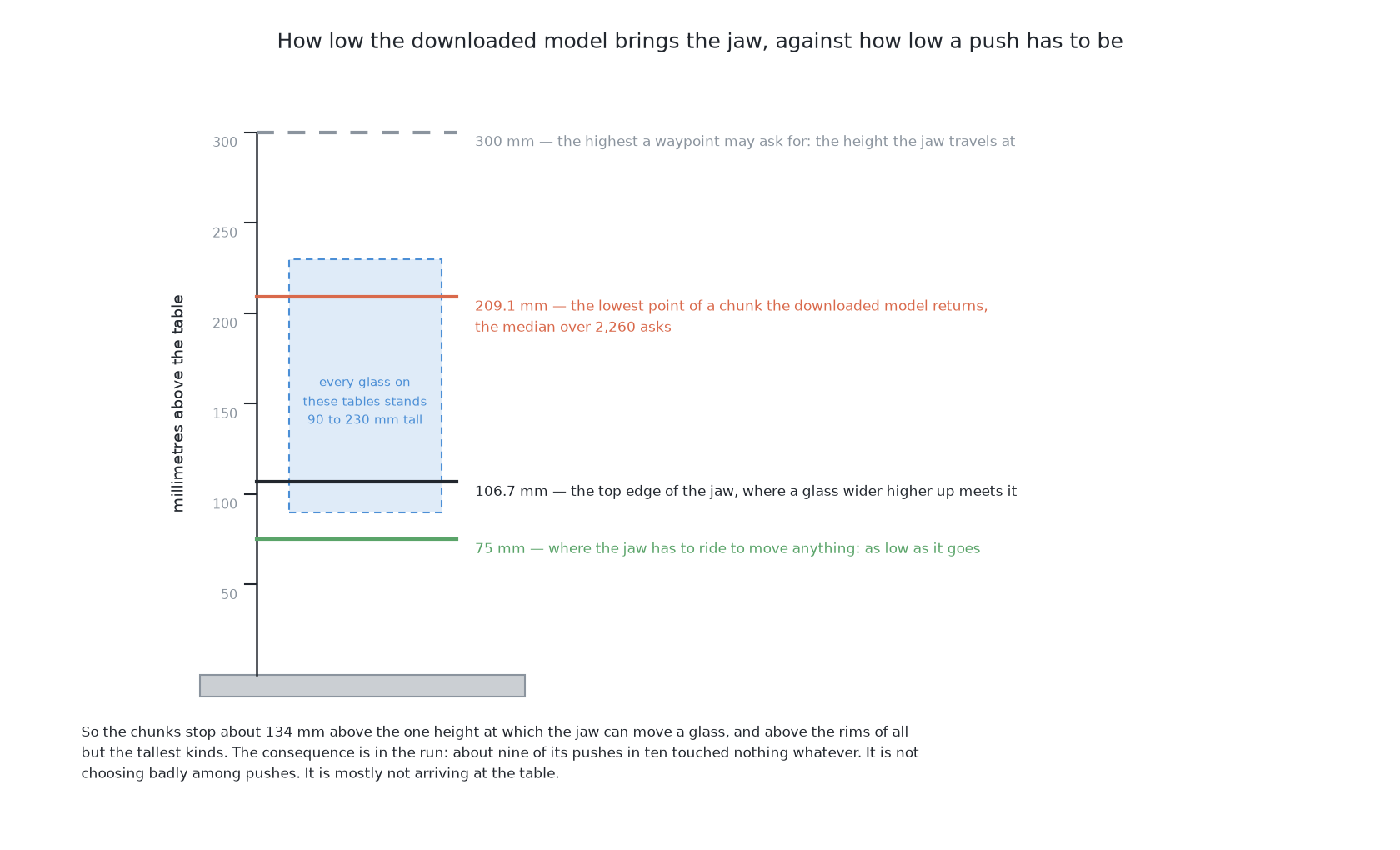
What was expected, and what happened gives the measured heights. The six measured scores are in the results. The next section says what this score teaches.
5. Where it is strong and where it breaks#
This section uses the score above to show the method's good and bad sides.
It is cheap and quick to try. But it has no input for the force the jaw felt, and it cannot learn from its mistakes. The one repair is more training on this cell's pushes, and that is the next solution. How it compares gives the evidence. The next section turns this into advice.
6. When to choose it#
This section says when this method is the right choice.
Try it first, and expect to replace it. It is the cheapest way to learn whether the task needs any training at all. It can be good enough when the task looks like the model's own training data. Do not choose it when the scene is very different, as it is here.
The main lesson is that a poor score here is still useful. It gives the fine-tuned model a clear starting point to compare against.
The code is in
src/09_pushing-the-glasses-apart/05-smolvla-as-it-downloads/.
The full chapter starts at what it
is.
← A world model, then plan with it · The same model, fine-tuned here →