One neuron worked one neuron out by hand. This page joins neurons into a network. It starts with the smallest network that has anything in the middle: three readings, one layer of four neurons, and one neuron at the end that gives the answer. It works one moment of the grasp through that network with every number written out. Then it makes the network bigger in the two ways a network can grow, by making the layer wider and by adding a second layer, and it counts what each of the three networks costs.
The moment used here is the first one in the grasp example, in which the gripper is ready to close on the cup. Its readings are 0.42, 0.55 and 0.30.
When you reach the end you will know what each neuron of a small network does with those three readings, how the neuron at the end turns four numbers into one probability, and how many numbers a network owns when it is made wider or deeper.
Contents#
- One layer of four neurons
- The layer, worked out
- The neuron at the end, worked out
- A wider layer, and a second layer
- What each network owns
- Where to read next
1. One layer of four neurons#
This section draws the network before any arithmetic, so that you know where each number on the rest of the page belongs.
The picture below shows the whole network. Read it from left to right.
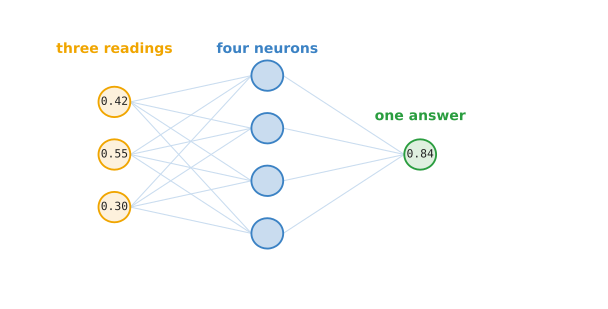
The three circles on the left are the readings. Each of the four neurons in the middle is a neuron like the one on one neuron. It reads all three readings, multiplies each by a weight of its own, adds a bias of its own, and puts the total through the rule. So each of the four neurons owns three weights and one bias.
Each neuron gives one number, so the layer turns three numbers into four. Those four numbers are the features that neural networks and neurons described: numbers worked out from the readings that say something useful about them.
The circle on the right is the neuron at the end. It never reads the arm. It reads only the four features, multiplies each by a weight of its own, adds a bias, and turns the total into a probability. Counting the layers that do arithmetic, this network has two: the layer of four neurons, and the neuron at the end.
The first thing to work out is what the four neurons give, and the layer, worked out does that.
2. The layer, worked out#
The section before said that each of the four neurons owns three weights and a bias. This section gives those numbers and works out the four features from them.
The table below has one row for each neuron. The columns headed distance, opening and brightness hold that neuron's weight on each reading. The bias column holds its bias. The sum column is the three readings multiplied by the three weights, added together, with the bias added. The last column is what is left after the rule.
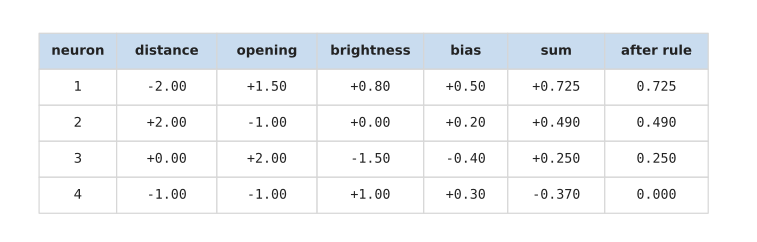
The first row is the neuron that one neuron worked out in full, with the weights -2.00, +1.50 and +0.80 and the bias +0.50. Its sum is +0.725.
The other three rows work the same way. Take the last one. Its weights are -1.00, -1.00 and +1.00, and its bias is +0.30. The distance gives 0.42 x -1.00 = -0.420. The opening gives 0.55 x -1.00 = -0.550. The brightness gives 0.30 x +1.00 = +0.300. Adding those three and the bias gives -0.420 - 0.550 + 0.300 + 0.300 = -0.370.
The rule at the end of each neuron is the one from one neuron: a total below 0 becomes 0, and any other total passes through unchanged. So the first three sums pass through, and the fourth becomes 0.000. The four features are 0.725, 0.490, 0.250 and 0.000.
The weights in this table were chosen by hand, so that each neuron answers a question a person can state, such as whether the arm is near the cup with the gripper open and the cup straight ahead. A network on a robot says what each of the four answers. In a trained network the weights are found by training, and the features usually have no such tidy description.
The four features now go to the neuron at the end, and the neuron at the end, worked out follows them there.
3. The neuron at the end, worked out#
The section before turned the three readings into four features. This section turns those four features into the network's answer.
The neuron at the end owns four weights, one for each feature, and one bias. A weight above 0 means that feature counts for the grasp holding. A weight below 0 means it counts against. The table below works the arithmetic out one row at a time: the feature's value, its weight, and the product of the two. The last three rows give the bias, the sum and the answer.
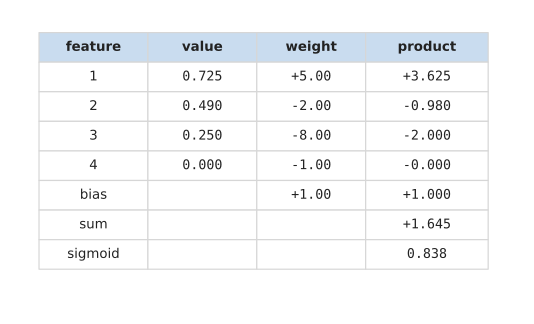
The first feature has the weight +5.00, and 0.725 x 5.00 = +3.625. The second has the weight -2.00, and 0.490 x -2.00 = -0.980. The third has the weight -8.00, and 0.250 x -8.00 = -2.000. The fourth has the weight -1.00, but its value is 0, so it adds nothing. A feature of 0 cannot push the answer either way, however large its weight is. Adding the bias of +1.00 gives a total of +3.625 - 0.980 - 2.000 + 1.000 = +1.645.
The answer wanted is a probability, meaning a number between 0 and 1. So the neuron at the end uses a different rule. It is called the sigmoid, and it squeezes any number into that range. A large negative number comes out near 0, a large positive number comes out near 1, and 0 comes out as exactly one half. The total of +1.645 comes out as 0.838. So the network says that if the gripper closed now, the grasp would hold about five times in six. Activation functions explains both rules properly.
The four weights and the bias of this neuron were chosen by hand too. They were chosen so that the three moments of the grasp example come out the way a person watching the arm would judge them, and a network on a robot checks all three.
That is the smallest network with a middle, worked out completely. A working network is bigger, and a wider layer, and a second layer shows the two ways it can grow.
4. A wider layer, and a second layer#
The network so far has one layer of four neurons. There are only two ways to make it bigger: put more neurons in that layer, or add another layer after it. This section draws one of each, keeping the same three readings and the same single answer.
The first way makes the layer wider. The picture below has one layer of eight neurons instead of four.
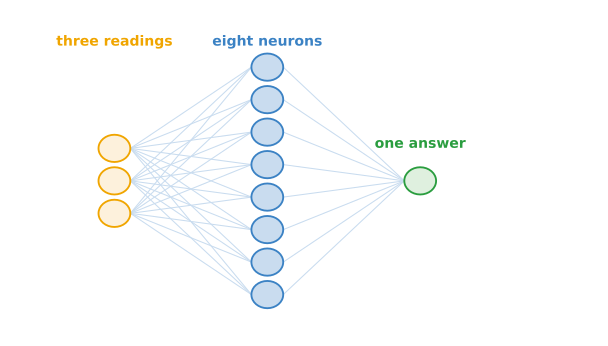
Every one of the eight neurons still reads the three readings. So the network now works out eight features from the readings instead of four, and the neuron at the end weighs eight numbers against each other. A wider layer gives the network more separate questions to ask about the readings at the same time.
The second way makes the network deeper. The picture below keeps the first layer of four neurons and adds a second layer of four after it.
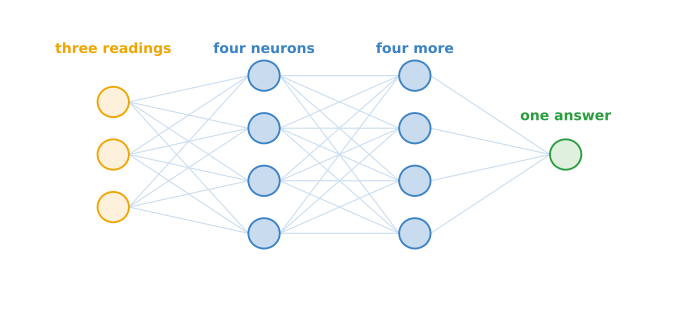
The neurons in the second layer never read the arm. Each one reads the four features of the first layer, so it works out a feature of features. The neuron at the end then reads those. A second layer lets the network build its questions out of the answers to simpler ones.
Neither picture has numbers in its circles. Working an answer out would need new weights, and weights picked by hand for eight neurons, or for a second layer, mean nothing in particular. What the two shapes can do differently is the subject of layers, depth and width. What can be worked out now is what each one costs, and what each network owns counts it.
5. What each network owns#
Every weight and every bias is a number the network owns, which training has to find and which a computer has to store. This section counts them for the three networks on this page.
A layer of neurons that reads a list of numbers owns one weight for every pair of a number read and a neuron, plus one bias for each neuron. So a layer of 4 neurons reading 3 readings owns 3 x 4 = 12 weights and 4 biases.
The table below counts the three networks. Read it a row at a time. Each middle column gives the weights plus the biases of one layer, and the last column adds them all up.
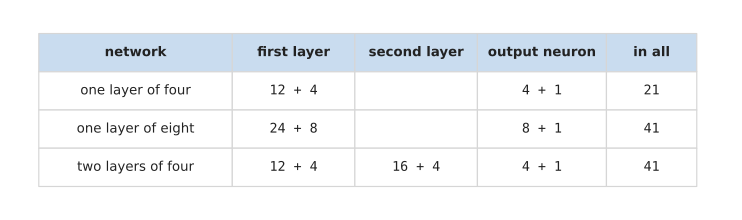
The network with one layer of four owns 21 numbers. Making that layer eight neurons wide takes it to 41. Adding a second layer of four instead also takes it to 41, because the second layer owns 4 x 4 = 16 weights and 4 biases.
So here the two ways of growing cost exactly the same. That is a coincidence of these sizes, but it makes the point clearly. The cost of a network is set by how many numbers it owns, and a wider network and a deeper one can own the same number while doing different things with them. Layers, depth and width shows what each one does, and layers, depth and width, worked out counts the cost for larger networks.
These sizes are far from realistic. A layer in a working model usually holds hundreds or thousands of neurons, and a network usually has many layers. The arithmetic does not change at all with the size, which is why it is worth following while the numbers are still small.
6. Where to read next#
- A network on a robot is the next page. It runs all three moments of the grasp example through the network with one layer of four, and says what each feature means for the arm.
- Activation functions explains the two rules used on this page, and shows why a network without them is no better than one neuron.
- Layers, depth and width compares the wider network and the deeper one, and says what each extra layer gives you.